How Full-Funnel Marketing Is Reshaping D2C Marketing Strategy
Oct 03, 2026
HT Syndication
New Delhi [India], October 3: Where did your last customer actually discover your brand? Was it an Instagram Reel, a creator review, a Google search, a YouTube video, or the marketplace where they finally purchased?
For many brands, the answer is not one channel but several working together.
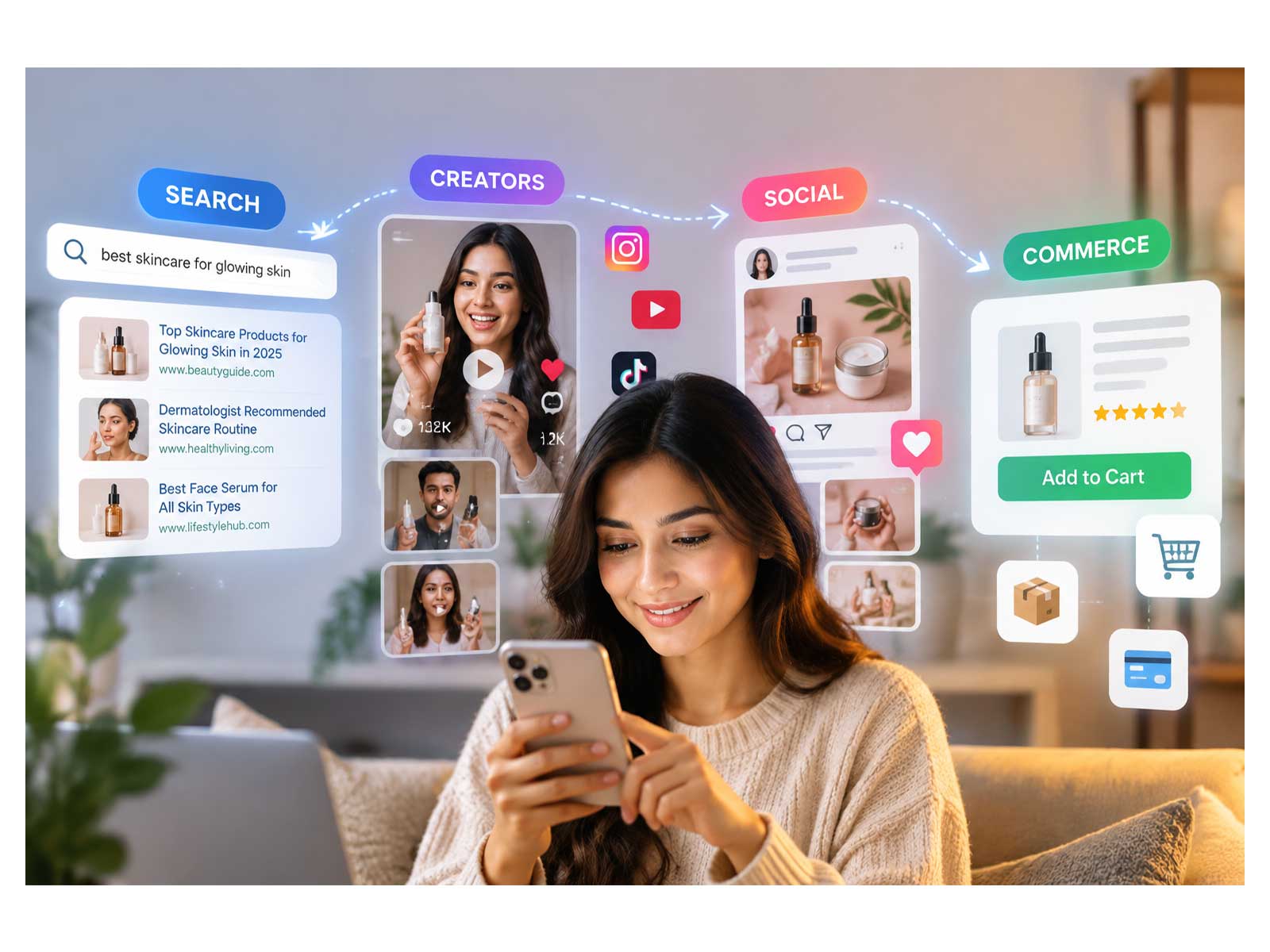
Customers no longer move neatly from awareness to consideration and then conversion. They discover products while scrolling, validate them through creators, search for more information, compare alternatives, and buy wherever the process feels easiest. This shift has made a connected approach to D2C marketing strategy essential, where search, social media, content, performance campaigns, and commerce experiences work together to guide customers across the entire journey.
Building this connected ecosystem requires brands to align multiple touchpoints instead of managing each channel separately. This is where a digital marketing agency in India can help create integrated strategies that connect discovery, engagement, and conversion.
The digital marketing funnel is not disappearing, but its stages are overlapping. Search can create discovery, social media can shape purchase decisions, creators can build trust, and commerce platforms can influence the final choice. The challenge is no longer simply selecting the right channel. It is making sure each channel supports the next.
How Is Search Moving Beyond the Bottom of the Funnel?
Search was once treated mainly as a demand-capture channel. A customer discovered a product elsewhere, searched for it, compared options, and then purchased. Today, search often appears much earlier in the journey.
Customers may research a category, compare features, explore alternatives, read reviews, or investigate a product they first saw on social media. This means search content has to do more than close a sale. Educational articles, comparison pages, product explainers, reviews, and videos can all influence whether a brand enters the customer’s consideration set.
In many cases, social media creates curiosity, while search becomes the place where that curiosity is validated.
Social Media Is Evolving Into a Discovery Platform
Social platforms are no longer used only for entertainment. Customers increasingly use Instagram and YouTube to look for reviews, demonstrations, comparisons, ideas, and real customer experiences.
That changes what brands should publish. A reel should create curiosity, a demonstration should answer a question, a founder video should build confidence, and a customer story should reduce uncertainty.
Social media becomes more valuable when brands think beyond likes and engagement. The important question is what the customer does next. They may search the brand, visit the website, return later, or compare the product elsewhere before buying.
How Are Creators Changing the Digital Marketing Funnel?
Creators make the funnel even less linear because one piece of content can perform several roles at once. A creator can introduce a product, explain why it matters, demonstrate how it works, answer objections, provide social proof, and direct viewers toward a purchase within the same video.
That means creator selection should go beyond follower count. Brands need to consider whether the creator can explain the product clearly, speak naturally to the right audience, and create believable content that remains useful beyond the original post.
That means creator selection should go beyond follower count. Brands need to consider whether the creator can explain the product clearly, speak naturally to the right audience, and create believable content that remains useful beyond the original post. Partnering with an influencer marketing agency in India can help brands identify relevant creators and build campaigns that align with broader marketing goals.
Commerce Is Becoming Part of the Discovery Journey
The gap between discovering a product and purchasing it is shrinking. A customer can watch a demonstration, read comments, visit a product page, ask a question through WhatsApp, compare prices, and complete the purchase within a short period.
This changes the role of e-commerce pages and marketplaces. A product page is no longer simply where the transaction happens. It also needs to educate, provide proof, answer objections, and continue the story that began through search, social, or creator content.
Wherever customers can buy, brands should assume they are still evaluating the product. Discovery and conversion are increasingly happening within the same experience.
Building a Full-Funnel D2C Marketing Strategy
The biggest shift is to stop creating completely separate strategies for search, social, creators, and commerce. Brands should begin with the customer journey and ask whether each interaction naturally leads to the next one.
Someone who discovers a brand through Instagram should find consistent information when they search on Google. A customer who watches a creator demonstration should reach a product page that reinforces the same message. If they leave without purchasing, the next retargeting message should reflect what they already know.
A strong D2C marketing strategy connects these interactions so search captures intent, social creates demand, creators build trust, commerce removes friction, and retargeting continues the conversation.
Measuring Success in a Connected Marketing Ecosystem
As channels become more connected, measurement becomes harder. A creator video may not generate the final sale but could increase branded searches. Instagram may introduce the product while Google receives the conversion. YouTube may educate a customer who later returns directly to the website.
This is why last-click reporting can create misleading conclusions. Brands should still track customer acquisition cost, conversion rate, repeat purchases, revenue, and return on ad spend, but they should also monitor branded search growth, direct traffic, returning visitors, and product-page engagement.
The more useful question is not simply, “Which channel got the sale?” It is, “Which interactions helped the customer become ready to buy?”
Common Challenges in the New Marketing Funnel
One common challenge is organising marketing around internal teams instead of customer behaviour. Search, social, creators, performance media, and e-commerce may all be managed separately, even though the customer experiences them as one journey.
Another mistake is expecting every channel to prove itself through immediate conversion. Discovery channels may look inefficient through last-click reporting even though they are creating demand that another channel later captures.
Brands also lose valuable insight when search behaviour, creator content, social engagement, and product-page data remain separated rather than feeding into one shared understanding of the customer.
The Future of the D2C Marketing Strategy
The biggest shift is not that the funnel has disappeared. Customers can now enter almost anywhere, move between stages, and complete several stages within the same interaction.
A modern digital marketing funnel should make it easy for curiosity to become understanding, understanding to become trust, and trust to become a purchase regardless of where the journey begins.
For brands trying to connect search, social, creators, paid media, and commerce into one system, the opportunity lies in creating a seamless customer journey where every interaction supports discovery, trust, and conversion.
The strongest D2C marketing strategy will not depend on one winning channel. It will depend on understanding how each channel makes the next one more effective.
(ADVERTORIAL DISCLAIMER: The above press release has been provided by HT Syndication. ANI will not be responsible in any way for the content of the same.)