S Korea postpones third launch of homegrown rocket
May 25, 2023
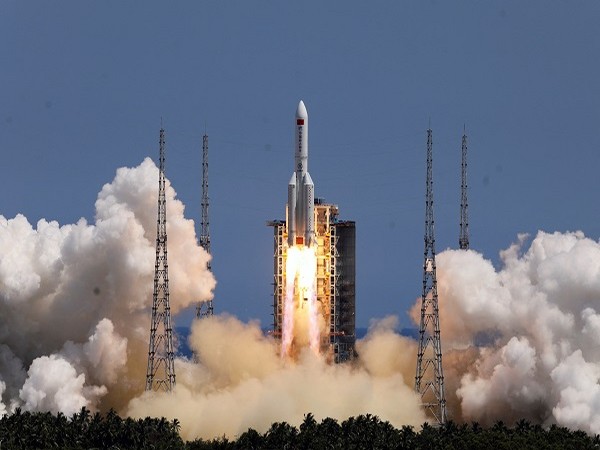
Seoul [South Korea], May 25: South Korea on Wednesday postponed the launch of its homegrown Nuri rocket after a technical glitch was detected just hours before lift-off, officials said. It was the third planned launch of Nuri, following a failed first attempt and a successful second mission last year. A communication error between the launch control computer and another computer managing the launch pad was detected during preparation, forcing officials to postpone, said Oh Tae-seog, vice minister of science and ICT.
"It's currently believed there is no problem with the projectile itself, so it will remain erected" while scientists and software engineers try to resolve the issue, Oh said in a briefing. If they find a solution by Thursday morning, they will hold a meeting to decide whether to carry out the launch that day, he added. In previous tests the rocket carried payloads mainly designed for verifying the performance of the launch vehicle.
This time, the rocket was set to be topped with eight working satellites, including a "commercial-grade satellite", according to the country's science ministry. The three-stage rocket, more than 47 meters (155 feet) long and weighing 200 tons, was supposed to be launched from the Naro Space Center in South Korea's southern coastal region at 6:24 pm local time (0924 GMT).
Nuri was transferred and erected at the launch pad on Tuesday. "The third launch is aimed at putting a domestically developed satellite with observation missions into the target orbit," KoJeong-hwan, director of the Nuri rocket project at the Korea Aerospace Research Institute (KARI), told reporters earlier. The 180-kilogram NEXTSat 2 satellite, developed by the Korea Advanced Institute of Science and Technology, is the first and main payload meant to be placed into orbit at an altitude of 550 kilometers, KARI said. The satellite has a small synthetic aperture radar that can capture high-resolution images regardless of weather conditions. Success in launching a third time will depend on whether the eight satellites are properly placed into their target orbits. The three-stage Nuri rocket has been a decade in development at a cost of two trillion won ($1.5 billion).
Mixed record
The South Korean space program has a mixed record - its first two launches in 2009 and 2010, which in part used Russian technology, both ended in failure. The second one exploded two minutes into flight, with Seoul and Moscow blaming each other. Eventually a 2013 launch succeeded, but still relied on a Russian-developed engine for its first stage.
Last June, South Korea became the seventh nation to successfully launch a one-ton payload on their own rockets. Two months later, it launched its first lunar orbiter on a year-long mission to observe the Moon. The country has laid out ambitious plans for outer space, including landing spacecraft on the Moon by 2032 and Mars by 2045. - AFP
Source: Kuwait Times