An EV Newcomer That Doesn't Behave Like One
Jan 05, 2026
NewsVoir
Gurugram (Haryana) [India], January 5: On paper, this looked like an underdog story waiting to happen. A young electric vehicle maker from Vietnam, a country better known for speed in textiles than speed on four wheels, stepping into India, the third largest car market in the world. Naturally, observers wondered how this brand would stand out among battle-hardened incumbents and cost-sensitive consumers.
But the underdog never played its part.
Within months of stepping onto Indian soil, VinFast began doing a sequence of moves that made analysts double take. More and more dealers started signing with the brand. Banks shows up to finance both customers and showrooms. And in Tamil Nadu, a factory rose from empty land to a functioning production hub, producing VF 6 and VF 7 units assembled by local workers.
Momentum like this is rarely accidental. It flowed from a playbook VinFast had tested in Vietnam, refined in Southeast Asia, and reinterpreted for India's unique scale. At the core of this playbook is a trio of commitments that shaped its rise at home and define its ambitions abroad. VinFast refers to them as its three core pillars: high-quality vehicles, inclusive price, and exceptional aftersales policies. These pillars helped VinFast become the top selling automaker in Vietnam, and now they form the spine of its India strategy.
Why VinFast Starts With VF 6 and VF 7
The VF 6 and VF 7 are perharps the clearest expression of how those pillars translate into practice.
VinFast could have chosen to debut with any model, particularly a smaller one to get a low-risk entry. The brand has a wide lineup, from the cute and compact VF 3 that became a phenomenon in Vietnam to the luxury seven-seat VF 9. Yet it chose the VF 6 and VF 7 for India because they embody the company's core philosophy in a way that feels tailored to Indian consumers.
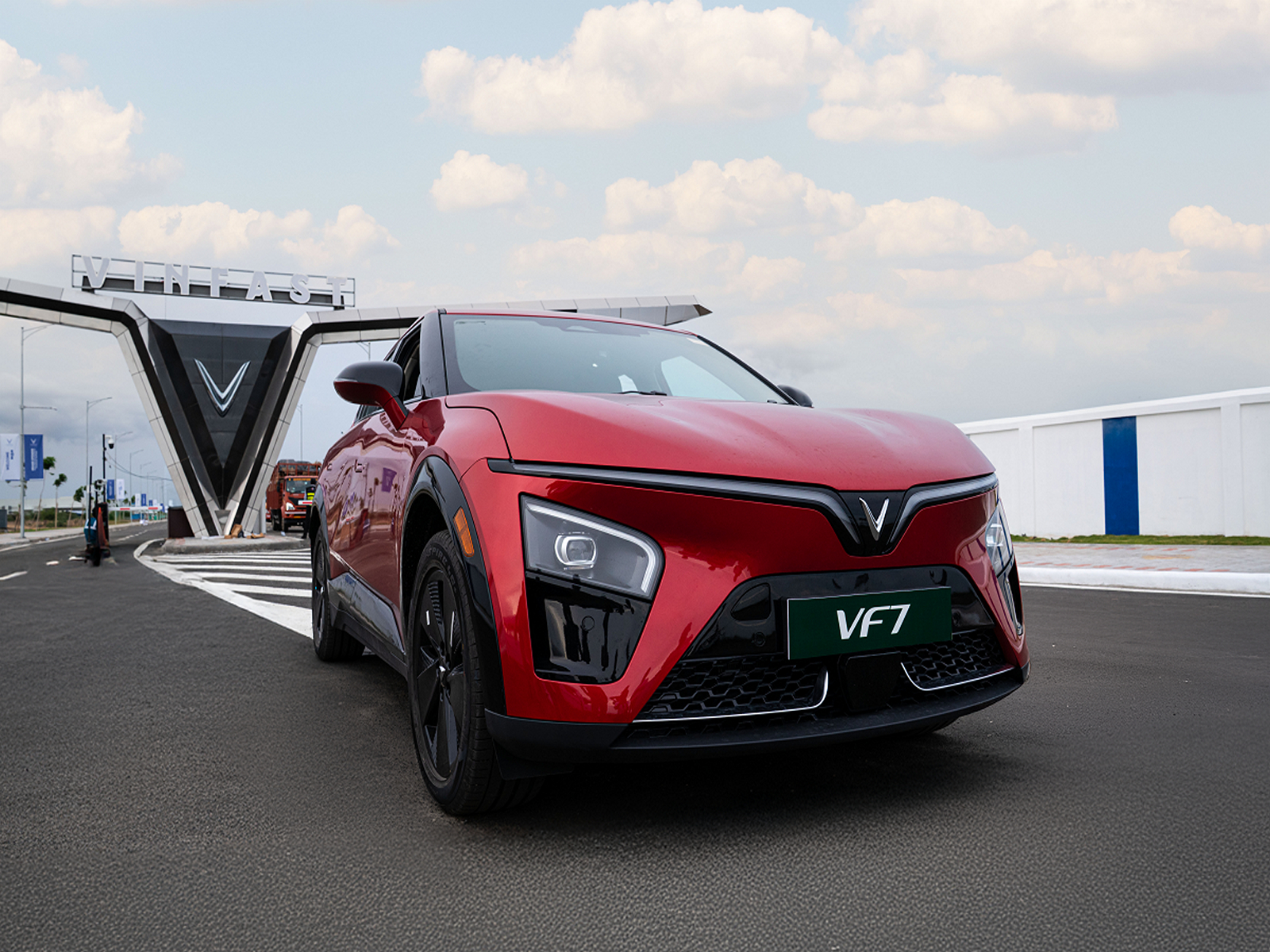
First, high-quality vehicles. Both models carry European-influenced design and a level of fit and finish that defies the newcomer label. The VF 7 in particular has already captured attention. It was named EV Disruptor of the Year by the Jagran Hi-Tech Awards for its modern styling, spacious interior, and advanced features, which judges viewed as punched far above its expected segment position.
Second, inclusive price. VinFast does not aim to be the cheapest brand in the market. Instead, it positions itself where aspiration meets accessibility. This formula succeeded in Vietnam, where VinFast offered generous equipment levels at competitive pricing, making EV ownership realistic for more households without watering down the premium experience. Even entry models came with features often reserved for higher segments.
The VF 6 and VF 7 follow the same logic in India. They look premium, feel premium, and drive premium, yet remain priced for a segment where buyers are ready to upgrade from combustion vehicles without stepping into luxury territory.
Third, exceptional aftersales policies. VinFast learned in Vietnam that convincing consumers to shift from petrol to electric requires more than technology. It requires confidence. Long warranties, clear maintenance policies, and easy access to service became part of its brand identity. In Vietnam, warranties for several models stretch up to ten years, a signal of engineering confidence that reshaped consumer expectations. Vietnamese users often reported that servicing VinFast models cost dramatically less than comparable petrol cars, sometimes by more than 80% in real world comparisons. These differences helped the brand surge to the top of the Vietnamese market and created a new expectation that a premium EV should also be practical.
In India, the VF 6 and VF 7 arrive with the same class-leading warranty, and VinFast does not stop there. Buyers also get three years of free maintenance and three years of free charging, a little gift made possible through its strategic partner V-Green.
Taken together, the VF 6 and VF 7 represent exactly how the brand intends to flip the script in each market it's present: Deliver vehicles that feel premium in design and experience, price them within reach of the middle class, and support them with aftersales care that makes EV ownership feel reassuring.
Factory Speaks Louder Than Ads
There is marketing, and then there is a factory rising from the ground in 15 months.
VinFast's Tamil Nadu plant is the physical expression of the brand's belief in acting early and acting boldly. When the site was first chosen, there was nothing. The company surveyed fifteen locations across six states, chose Thoothukudi, and began construction with astonishing speed. Soon the plant rolled out the first VF 6 and VF 7, the very models that symbolize VinFast's aspiration in India.
The pace felt familiar. In Vietnam, the Hai Phong plant had already shown what VinFast's execution looks like at full throttle. TIME Magazine described the factory floor as a place where "robot arms twirl like pneumatic ballerinas," welding with 98% automation and producing multiple models on a single line. Even Google Maps could not keep up. The magazine noted that the satellite view still showed half of the 877 acre site sitting under the sea because VinFast built the reclaimed land faster than the satellite could refresh.
Before the year was over, VinFast made another decisive move by signing an MOU with the Government of Tamil Nadu to expand its Thoothukudi facility on roughly 500 acres of newly allocated land. As part of the second phase of its 2 billion dollar commitment, VinFast is expected to invest an additional 500 million dollars to build dedicated production lines for electric buses and e-scooters, expanding beyond its current electric car output.
Beyond the factory, VinFast brings with them a full ecosystem philosophy. Even before sales began, VinFast secured nationwide service and roadside partnerships with myTVS, RoadGrid, and Global Assure. It formed a battery lifecycle agreement with BatX, showing long-term responsibility for sustainability. And it laid the foundation for a charging network through V-Green, the company founded by VinFast founder Pham Nhat Vuong and which has been platform that already anchors Vietnam's dense EV infrastructure.
In parallel, the support infrastructure extends through financing partnerships. VinFast secured alliances with YES BANK, HDFC Bank, ICICI, Kotak, Axis, and the State Bank of India. These agreements cover retail buyers, dealer inventory, corporate fleets, and even in showroom financing. Banks responded enthusiastically perharps because VinFast arrived with credible scale, local manufacturing, and a commitment to long term presence that made lenders comfortable extending generous limits.
Dealers noticed too. Within months, inquiries poured in daily from dealership groups across India wanting a spot in the network, including cities that were nowhere near VinFast's initial rollout plan.
This ecosystem approach is not only operational. It is philosophical. It assures customers that buying a VF 6 or VF 7 is not a leap of faith into an untested category, but a move into a supported, well designed EV experience.
The early response from Indian journalists and influencers has been a clear indicator of VinFast's resonance. During his tour of Vingroup's ecosystem and the VinFast Hai Phong manufacturing complex, Vishal Ahlawat was immediately struck by the sheer scale on display. As he put it, "The first thing I noticed was the vastness of the land, an enormous facility where they manufacture two wheelers, four wheelers, and even buses."
Seeing VinFast vehicles everywhere in Vietnam also sparked a sense of possibility for the Indian market. He added, "I would definitely love to see that in India someday."
A First Year That Reads Like a Mission Statement
Perhaps the most striking part of VinFast's first year in India is not the size of the factory or the number of banks or even the speed of construction. Rather, it's the clarity of its intent. The company behaves not like a speculative entrant but like a long-term partner, building not for this quarter, but for the years that follow.
It has already woven India into a production and service ecosystem that spans Vietnam, Indonesia, and other markets in Asia. And it has introduced vehicles that are not stepping stones, but flag bearers. The VF 6 and VF 7 are the embodiment of the company's three pillars. They prove that VinFast is not trying to sell just electric cars to India, but trying to build a complete, trustworthy EV experience.
In Vietnam, this approach took VinFast from outsider to market leader. In India, it has already begun rewriting expectations of what a newcomer can pull off in a single year.
A first year rarely changes a market, but it can set the mood for what follows. And if this is how VinFast begins its India story, the next chapter for a newcomer that behaves nothing like a newcomer is bound to be worth watching.
(ADVERTORIAL DISCLAIMER: The above press release has been provided by NewsVoir. ANI will not be responsible in any way for the content of the same.)